Now Reading: Natural Long Nails: How to Grow and Maintain Them
-
01
Natural Long Nails: How to Grow and Maintain Them
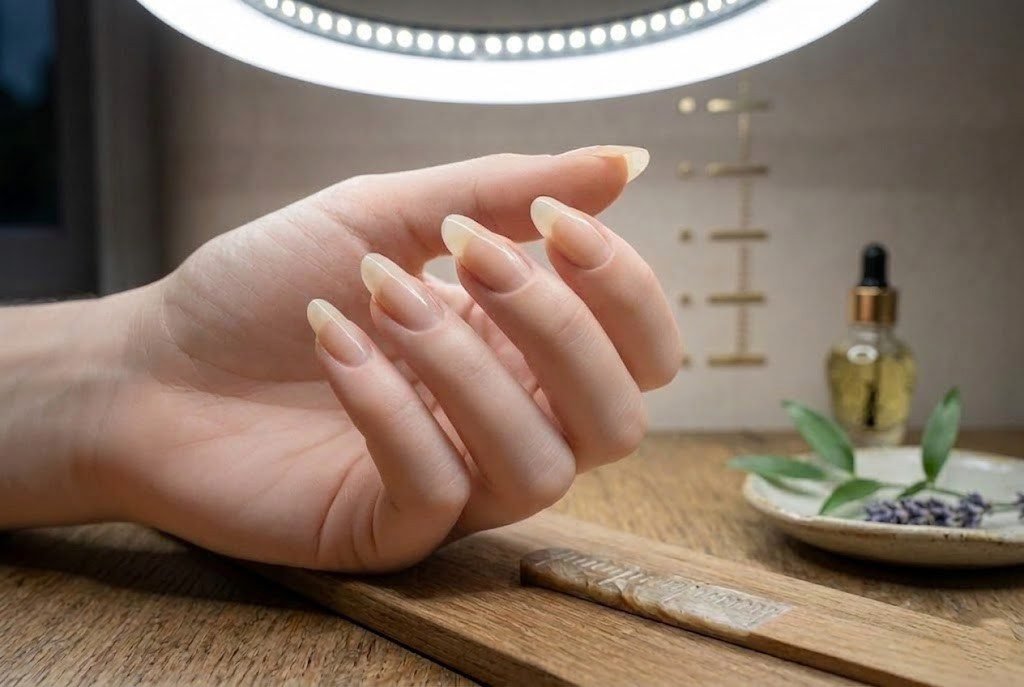

Natural Long Nails: How Long They Should Be and How to Keep Them
Trying to grow natural long nails but don’t know when to stop and what to aim. And when they finally get somewhere, they start snapping or peeling. This could be very frustrating. There is no rulebook; instead, you just figure it out yourself, or you keep going the wrong way and file them back down again.
The fact is that there’s no single “correct” length for natural nails. It depends on people differently which length suits their lifestyle, their nail shape, and the strength of the nail. But natural long nails could be easily maintained, making them less prone to breakage and healthier over time by following some clear guidelines. This post guides you about your own nail growth rate and assists in building a simple natural nail care routine that actually sticks.
Quick Answer: The ideal length for natural nails varies according to the lifestyle of different people, but according to nail care experts, to keep nails healthy and manageable, keep the free edge that extends past the nail bed about 2 and 5mm. Natural long nails that are beyond 5mm can be achieved, but they require proper maintenance, filing technique, and sufficient daily hydration to avoid splitting, peeling, and breakage.
In This Post
- What “the Right Length” Actually Means for Natural Nails
- How Long Does It Take Nails to Grow?
- The Best Nail Lengths for Natural Nails — and How to Choose Yours
- How to Maintain Natural Nails at Every Length
- How Long Should Toenails Be?
- Mistakes That Damage Natural Nails at Any Length
- Frequently Asked Questions About Natural Nail Length and Care
What “the Right Length” Actually Means for Natural Nails
What the internet doesn’t say enough is that nail length is not a moral choice. Neither short nails nor long nails are lazy, nor are long nails impractical. Prefer a length that you can actually maintain and keep it healthy and undamaged from how you use your hands in daily life.
However, there is a certain biological reason why some lengths are more effective than others. The sensitive connective tissue located directly underneath the nail plate is called the nail bed, which is entirely made up of a protein named keratin. It grows outward from the nail matrix, which sits hidden beneath your skin at the base of your nail. As the nail plate grows further, extending from the nail bed, its structural support weakens. The grown part is the free edge that is most vulnerable to snapping and breaking.
Think of it like a shelf, one part of which is attached to the wall and the other extends. The part that is three feet out has less support and will collapse under pressure. The free edge of the nail works the same way. As it grows longer without sufficient strength and thickness, it will likely peel or crack at the weak point where the nail bed and nail plate meet.
But this doesn’t lead to natural nails being impossible, but to the amount of attention and care needed for them, and that’s what this post covers.
How Long Does It Take Nails to Grow?
It is helpful to understand the current state of your nails before setting any length goal because nail growth is not a fast process at all.
On average, a fingernail grows roughly 3 mm per month and 0.1mm per day. Cosmopolitan notes that nail growth rate varies significantly between individuals and is influenced by everything from dominant hand use to seasonal temperature changes. And more or less for toenails that grow at around 1.5mm per month. These are the results of research cited by the American Academy of Dermatology, and these numbers vary based on different factors, including age, nutrition, and season. Stated nails grow faster in warmth. It also depends on which hand is dominant; your dominant hand’s nails grow slightly faster.
So if your goal is to have about 5mm of free edge, it will approximately take six to eight weeks if they do not break during it.
How Much Do Nails Grow in a Week?
On average, nails grow roughly 0.5 to 0.7mm per week. Less than a millimeter. And a single bad habit like aggressive filing, skipping cuticle oil, or using your nails as tools can instantly undo weeks of growth. You need more to protect the grown part than any growth hack.
Why Your Nails Might Grow Slower Than Expected
Nail growth rate is affected negatively by several factors, including low iron or biotin levels, thyroid issues, poor circulation, or simply aging. Cold weather also slows down nail growth. If your nails feel unusually stubborn to the same length for months, it’s worth mentioning to your doctor. Our full guide on how to make nails grow faster covers every method that actually moves the needle. Too slow nail growth may be a signal of an underlying health issue.
Building Natural Long Nails: Choosing the Right Length for You
There’s no such guide for nail length that works for every woman; however, a practical framework does exist. Natural nail length exists in three categories depending on how much free edge extends past your nail bed.
Short Natural Nails (Under 2mm Free Edge)
Short does not mean zero maintenance; even a barely-there free edge needs proper shaping and care. For people who do a lot of work with their hands, like typing, playing instruments, or who have nail plates that tend to be thin or flexible, short nails work best. Short length has maximum support and is less prone to breakage, splitting, or peeling.
Thinking short nails lose the visual elongation that many people love, but well-shaped, moisturized short nails look polished and intentional, not neglected.
Medium Natural Nails (2–5mm Free Edge)
This length seems short enough to stay functional and long enough to look feminine and outlined. A 2–5mm free edge can have either shape, whether you prefer oval, squoval, or rounded, with room to actually show up. It’s also the range where natural nail care is most sustainable. The nail plate still has suitable support at this length, and a basic maintenance routine is enough to keep it intact.
Target this length if you’re building a nail care routine for the first time.
Long Natural Fingernails (5mm and Beyond)
Long natural fingernails are definitely achievable. Real women grow them, but they don’t grow them by accident. Beyond 5mm, the free edge operates with very little structural support from the nail bed underneath, meaning that your daily habits carry significant weight.
For this length, hydration and moisturization are mandatory. The moisture of the nail and the skin around it provides nail plate flexibility that keeps it from snapping or cracking. Filing technique also matters more at this length, where any small rough edges or micro-tears in the free edge become starting points for cracks. And your nail shape has to be chosen with physics that square corners at long lengths can snap far more easily than rounded or oval edges, which distribute pressure more evenly across the free edge.
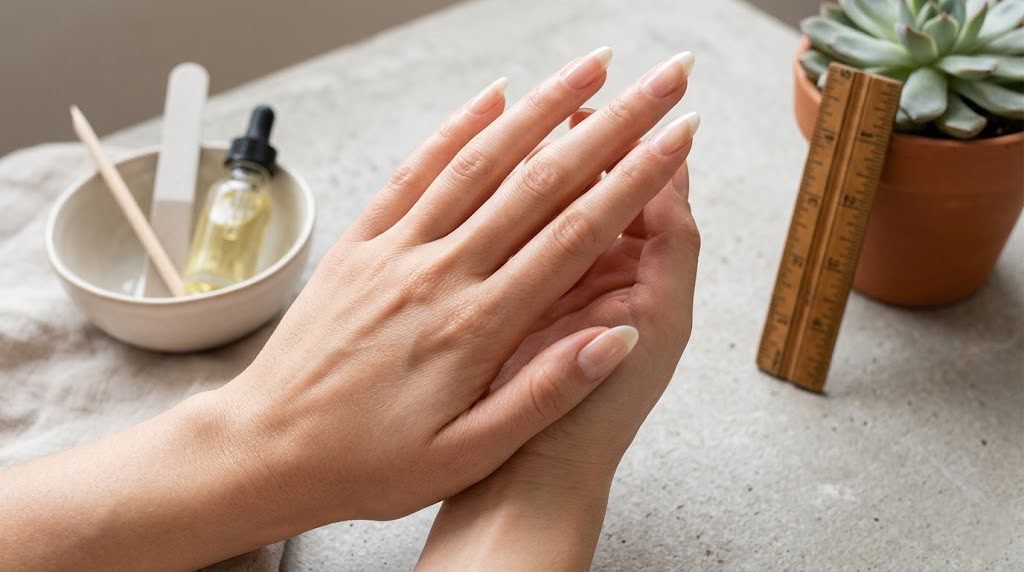
How to Maintain Natural Nails at Every Length
A solid nail maintenance routine doesn’t need to be very complicated or expensive; even basics, done consistently, make more of a difference than any product.
1. Filing the Right Way
Always file in one direction only, from the outside edge toward the center. Aggressive back-and-forth sawing creates micro-tears in the layers of the nail plate that lead to peeling and splitting nails. For a full breakdown by shape, see how to shape nails properly. A glass or crystal nail file is gentler on the keratin structure, so prefer it over metal or rough emery boards.
Do not file just after a bath when nails are wet and softer, as this is more prone to damage; instead, file dry nails.
2. How to Keep Nails Clean
Dirt and bacteria collect under the nail in the space between the free edge and the hyponychium, the skin that seals the underside of the nail to the fingertip. During regular hand washing, use a soft nail brush and mild soap. Avoid using one nail to dig underneath the other one; this causes the nail plate to lift away from the nail bed over time, a condition called onycholysis that is very uncomfortable and difficult to reverse.
3. Hydration and Cuticle Care
Cuticles exist for a reason. They are a protective layer to seal the nail fold, the pocket of skin where the nail plate emerges, against bacteria and moisture loss. Aggressive cutting means removing that seal and opening entry space for infections. Instead, apply a drop of cuticle oil and massage gently to soften them and then gently push them back. If you want the full step-by-step technique, our complete guide on how to push back cuticles covers every detail. Jojoba oil and vitamin E oil absorb particularly well into both the cuticle and the nail plate itself.
Hydration also matters for the nail plate. Repeated soaking and drying of nails causes constant expansion and contraction, causing damage to the keratin layers, making nails brittle. Use gloves for prolonged water exposure and apply a hand cream or nail oil before bed.
4. Buffing: When It Helps and When It Hurts
Gentle buffing smooths the ridges on the nail surface and gives nails a healthy natural shine, but over-buffing thins the nail plate. Buffing once a month is plenty. If you’re buffing weekly because the ridges keep coming back, take them as a symptom, not the problem. Vertical ridges are often a sign of dehydration or aging, but horizontal ridges deserve a conversation with your doctor.
How Long Should Toenails Be?
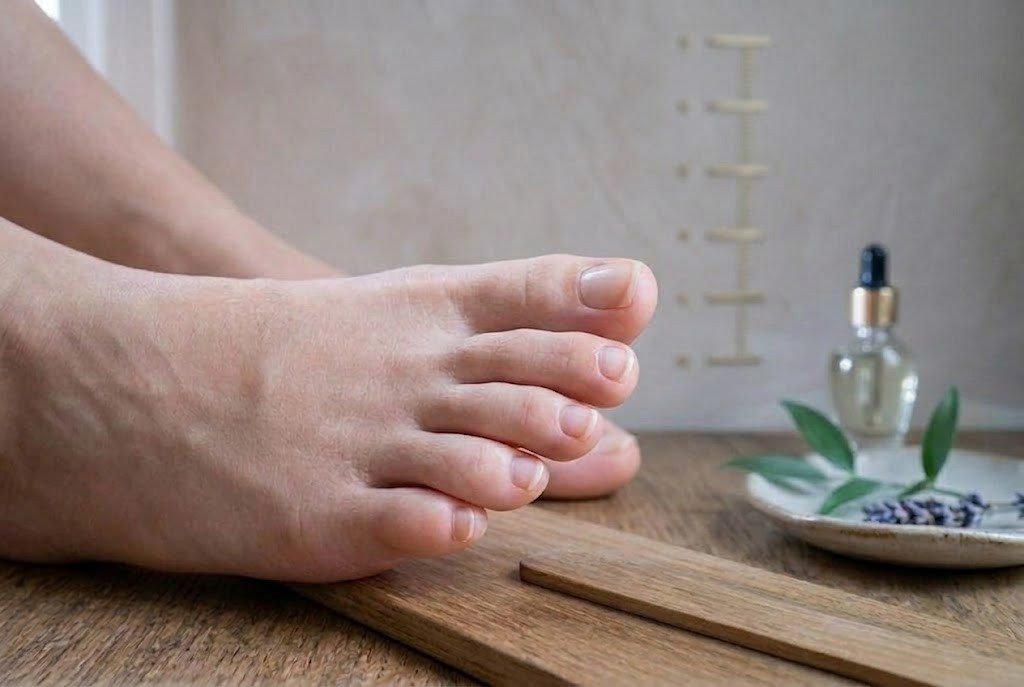
The rule for toenails is simpler for a practical reason. Too-long toenails create pressure against the inside of your shoe, causing pain, bruising under the nail, and ingrown nails over time. Cutting them too close can force corners into skin, leading to painful ingrown toenails.
The ideal length for toenails is right at the tip of your toe or just barely past it, which is roughly 1 to 2mm of free edge. Cut them straight across rather than in a curved shape to reduce ingrown nail risk. Use a proper toenail clipper, which is wider and flatter than a fingernail clipper, to make a clean cut without splitting the nail.
File the edges smooth afterward. Toenail edges left sharp or jagged can catch on socks, snag skin, or create small tears in the nail plate that invite splitting later.
Mistakes That Damage Natural Nails at Any Length
Using Your Nails as Tools
Every time you use nails to open packages, scratch off stickers, and pop open cans, you’re applying lateral pressure to the free edge, which is the direction the nail plate is least equipped to handle. It takes just one moment to snap weeks of growth, so make a habit of keeping a small tool for such things.
Filing Aggressively After a Break
This is understandable to file all the others down to match the length of one nail that breaks, but it’s unnecessary. Just file the broken nail to a clean and smooth edge and leave the rest. Shaping all nails uniformly to the shortest nail means losing progress on nine fingers to rescue one.
Skipping Gloves for Cleaning and Dishes
Cleaning products contain chemicals that strip the natural oils from the nail plate and surrounding skin. Hot water accelerates the process; even twenty minutes of dishwashing without gloves removes moisture that takes hours to replace. Rubber gloves are a genuine investment in your nail care routine and not an overreaction.
Peeling Off Nail Polish
Peeling polish instead of removing it means you removed the top layers of the nail plate with it. Doing this regularly makes your nails become visibly thinner, weaker, and more prone to surface peeling. Use a non-acetone remover and a cotton pad, and it takes only thirty extra seconds.
Over-filing the Sides of the Nail
Filing the sidewalls of the nail, the edges where the nail plate meets the nail fold, weakens the lateral support structure and can cause the nail to curve or become fragile at the sides. Shape the free edge only and leave the sidewalls alone.
Applying Nail Hardeners Too Often
This one surprises people. Hardeners contain formaldehyde or formaldehyde-releasing compounds that temporarily firm the nail plate, but their frequent use makes the nail so rigid that it becomes brittle and snaps rather than flexing. Use a nail hardener as a short-term treatment, not an everyday base coat. see our nail strengthener guide for how long a treatment cycle should actually run.
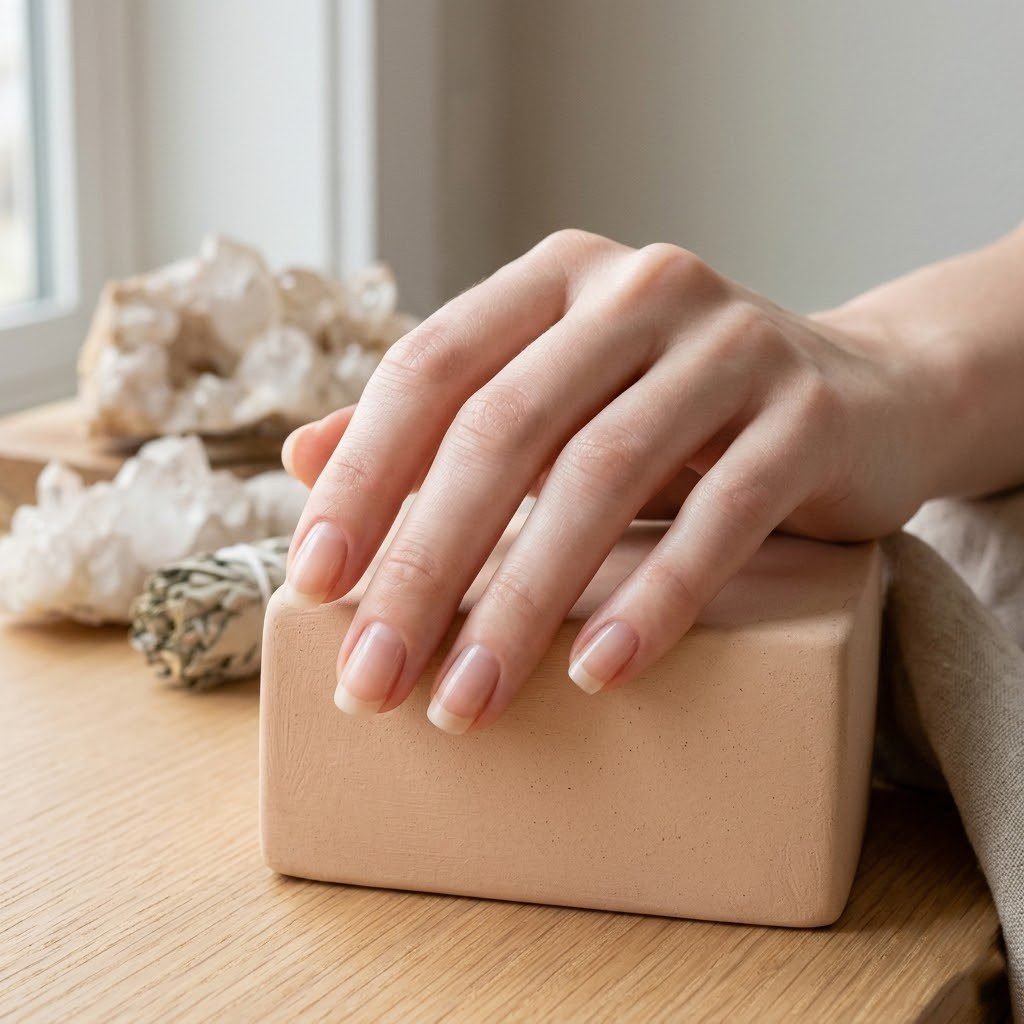
Growing natural long nails isn’t about finding the perfect product or waiting out a magic growth phase. It’s about understanding that your nails actually need consistent hydration, gentle handling and the right length for your real life, and showing up for that routine even when it feels small.
Pick a length that works for how you live. Learn your filing technique. Add cuticle oil to your nighttime routine. Those three things alone will change your nails more than anything else.
When you’re ready to take your nail care further, understanding the role of nutrition makes a real difference too.
Frequently Asked Questions About Natural Nail Length and Care
How strong are your nails supposed to be?
Healthy nails should be firm but not completely rigid; they need a small amount of flex to absorb impact without snapping. A healthy nail plate resists bending under light pressure but gives slightly rather than cracking. If your nails snap with almost no force, or if they bend dramatically without breaking, these are signs that something is off with hydration, nutrition, or nail plate integrity.
How fast do your nails grow?
About 3mm per month on average. The middle finger tends to grow fastest; the thumb and pinky slowest. Your dominant hand’s nails grow marginally faster than the other. After illness, poor sleep, or nutritional gaps, growth can slow noticeably. Consistent protein intake, adequate hydration, and protecting nails from physical trauma are the most reliable ways to maintain a steady growth rate.
How much do nails grow in a week?
Roughly 0.5 to 0.7mm per week, though this varies by individual. It’s less than a millimeter, which is why nail care is a long game. Small, consistent habits protect the growth you’re already making far better than any single product or treatment can accelerate it.
How long does it take nails to grow?
The average fingernail grows about 3mm per month, or roughly 0.5 to 0.7mm per week. That pace varies based on age, nutrition, dominant hand, and even the time of year, as nails grow faster in warmer months. Toenails grow at roughly half that speed, which is why toenail maintenance is a less frequent task than fingernail care.
How long should natural nails be for everyday life?
For most people, a free edge of 2 to 5mm is the most practical range, long enough to look defined and shaped and short enough to handle daily tasks without constant breakage risk. If you work with your hands like typing for hours or are just starting a nail care routine, aim for the lower end of that range and build from there as your technique improves.